
Divider

Understanding Local SEO: How to Get Your Business Found

Is your business invisible locally? Discover how Local SEO, accurate NAP citations, and a strong Google Business Profile can drive more customers to your door.

Understanding Local SEO: How to Get Your Business Found

What is Local SEO?

Local SEO (Search Engine Optimization) is a specialized strategy focused on making your business visible in geographically related searches. When potential customers turn to Google with high-intent queries like "coffee shop near me" or "best interior designer in [City]," Local SEO ensures your brand appears front and center.

For brick-and-mortar businesses, service providers, and anyone relying on regional foot traffic, this is not optional—it is essential. With the domination of mobile search and voice assistants, optimizing your online presence for your immediate neighborhood is the most effective way to capture leads who are ready to buy.

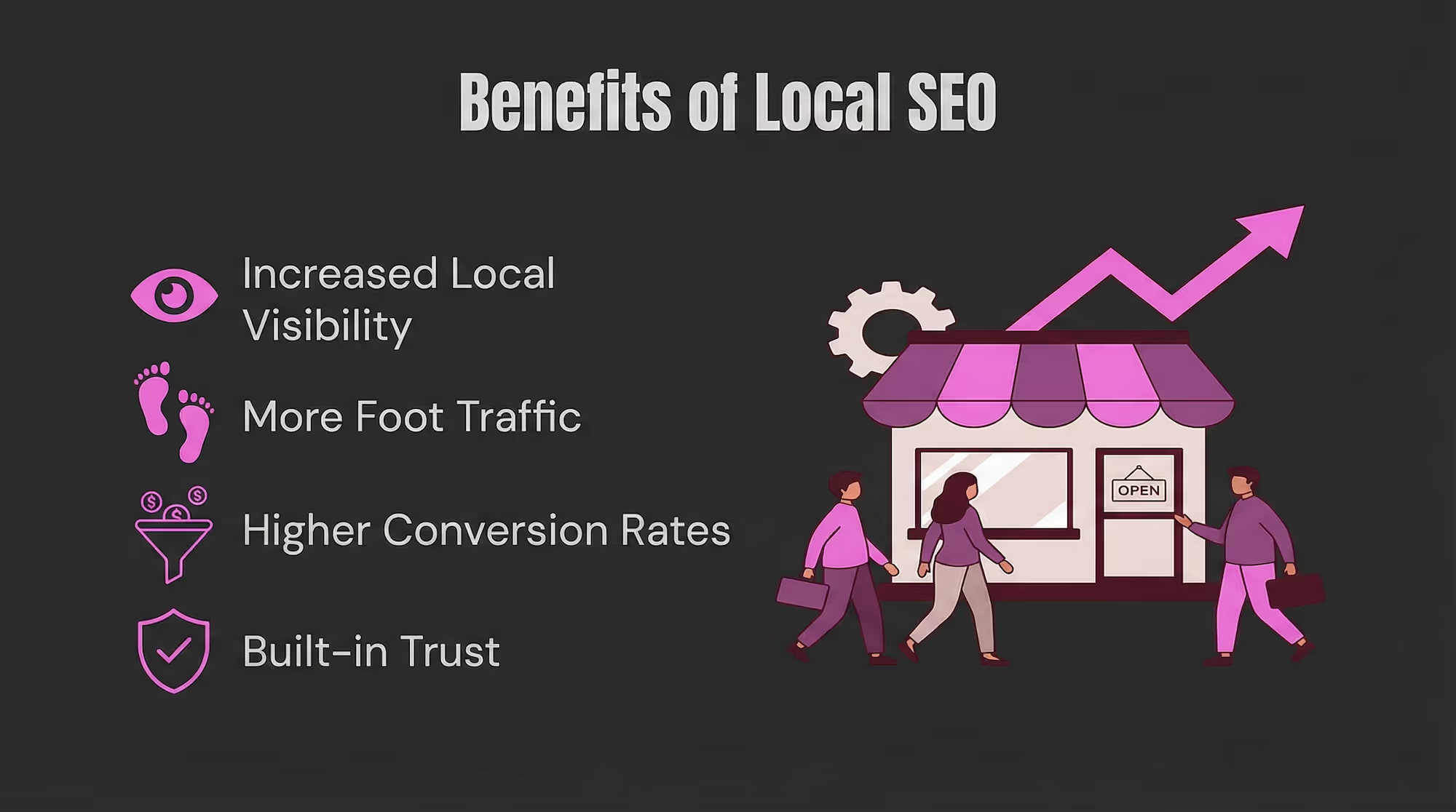
Key benefits include:
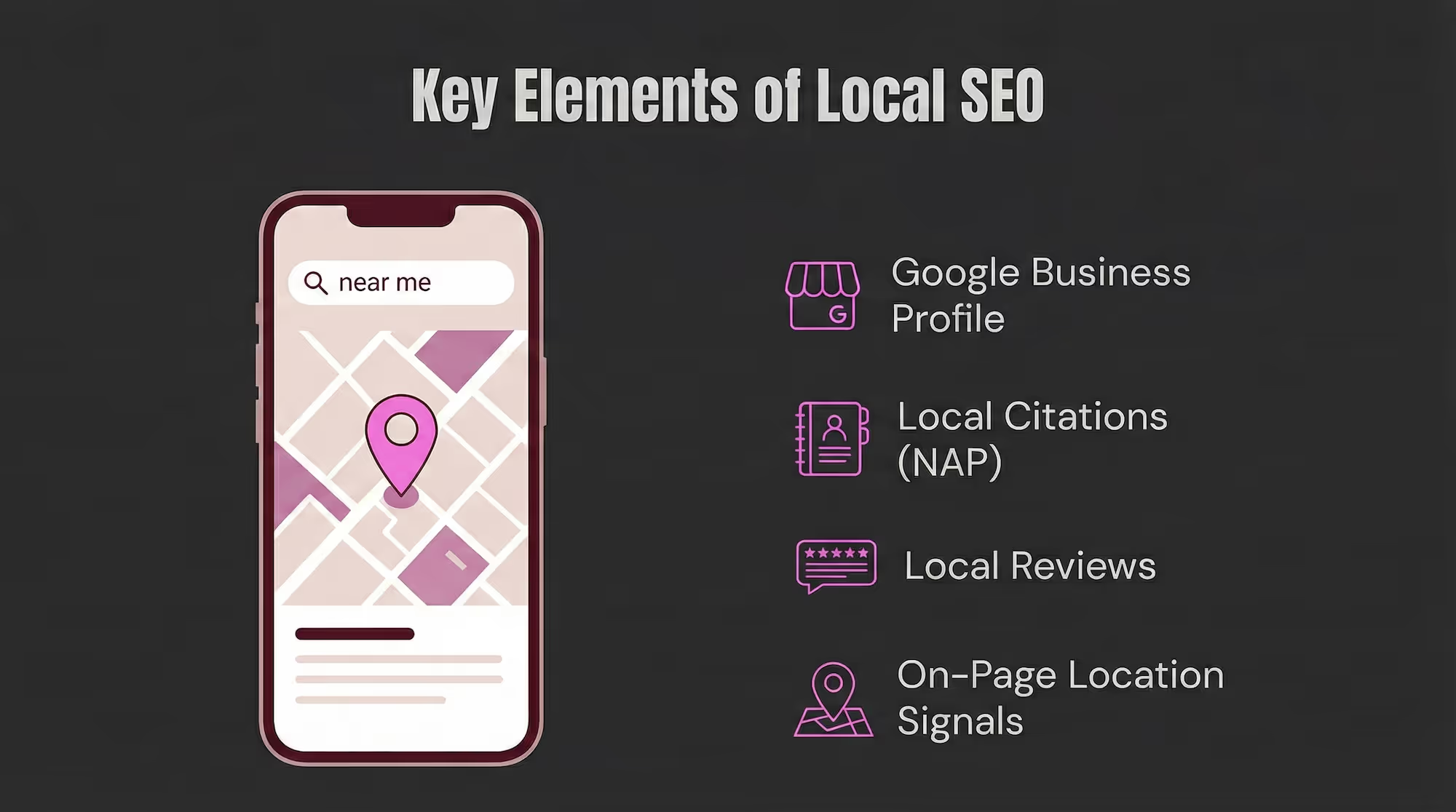
  • Dominating the "Map Pack": Appear in the coveted map listings at the top of Google search results.
  • High-Quality Traffic: Attract customers who are actively searching for your specific services nearby.
  • Built-in Trust: Leverage local reviews and verified listings to establish immediate credibility.

How It Differs from Standard SEO

While standard SEO services focus on improving rankings for broad, global keywords (like "how to design a logo"), Local SEO is all about proximity and intent.

  • The Intent: Local SEO targets transactional, immediate needs (e.g., "open now," "near me").
  • The Signals: Success relies on your physical location, Google Business Profile (GBP), and local citations, rather than just domain authority and backlinks.
  • The Results: You aren't just fighting for a spot on a list; you are fighting for a pin on the map.

Step 1: Claiming & Optimizing Your Google Business Profile

Your Google Business Profile (formerly Google My Business) is the cornerstone of your local strategy. Think of it as your digital storefront—it’s often the first thing a customer sees, even before they visit your website.

How to Claim It

  1. Search: Go to the Google Business Profile page and search for your business.
  2. Claim or Create: If it exists, request ownership. If not, create a new listing.
  3. Verify: Complete the verification process (usually via postcard, phone, or video) to prove you are the legitimate owner.

Optimizing for Impact

Once you have control, do not leave fields blank. A complete profile ranks higher:

  • NAP Accuracy: Ensure your Name, Address, and Phone number match your website exactly.
  • Categories: Choose a primary category that best fits your core service, and use secondary categories for specific offerings.
  • Visuals: Upload high-quality photos of your team, office, and past projects.
  • Hours: Keep these updated, especially during holidays.

Pro Tip: Engagement signals to Google that you are active. Respond to every review (positive or negative) and use the "Posts" feature to share updates or special offers.

Step 2: Researching High-Intent Local Keywords

You need to know what your local customers are typing into the search bar. The goal is to find "high-intent" keywords—phrases that indicate a user is ready to purchase or visit.

Finding the Right Terms

  • Brainstorm: What questions do your clients ask? (e.g., "Where can I find custom furniture in Bali?")
  • Competitor Analysis: Look at the titles and descriptions your top local competitors are using.
  • Google Suggest: Start typing your service + your city into Google and see what auto-completes.

The Power of Long-Tail Keywords

Don't just target "Digital Marketing." It is too broad. Instead, target specific, long-tail phrases like "Digital marketing agency for small businesses in Denpasar." These specific searches have lower competition and much higher conversion rates because the user knows exactly what they want. You can read more about broad vs. local strategies in our guide to SEO & Digital Marketing in Bali.

Step 3: Building Consistent NAP Citations

"Citations" are simply mentions of your business name, address, and phone number on other websites—like Yelp, Yellow Pages, TripAdvisor, or local business directories.

Why Consistency is King

Search engines use these citations to validate your business's existence and location. If your address is listed as "123 Main St" on Google but "123 Main Street, Suite A" on Facebook, it confuses the algorithm and lowers your trust score.

Action Plan:

  1. Audit: Search for your business online and list every directory where you appear.
  2. Correct: Fix any outdated phone numbers or old addresses immediately.
  3. Expand: Get listed in industry-specific directories (like Houzz for designers or Zomato for restaurants) and local Chamber of Commerce sites.

Step 4: Measuring Your Success

Local SEO is data-driven. You don't need to guess if it's working; you can track it.
  • Google Business Insights: This dashboard shows you exactly how many people called you, requested directions, or visited your website directly from your map listing.
  • Rank Tracking: Monitor where you rank for your main local keywords over time.
  • Traffic Segmentation: Use Google Analytics to see how much of your website traffic is coming from your specific city or region.

The Bottom Line

Local SEO is dynamic. Google’s algorithms change, and so do consumer behaviors. By keeping your Google Business Profile active, gathering reviews, and maintaining consistent citations, you position your business to dominate the local market.

If you are struggling to get your business found online, contact Keku Design today. We can audit your local presence and build a strategy that drives real foot traffic.